


From the clinic: another basketball season with big toe arthritis
When I first treated this patient in November 2024, arthritis in his big toe joint was making basketball painful. He had already undergone surgery to remove a bone spur earlier that year, but pain and stiffness remained. We chose a hyaluronic acid injection, also known as viscosupplementation, to see whether it could help him stay active.
At his recent follow-up, he reported that the injection had given him approximately a year of relief. He had completed two full basketball seasons, although some discomfort had returned. The pain was now a dull ache around the joint, sometimes throbbing after activity, and he wanted to discuss repeating the treatment.
What did the assessment show?
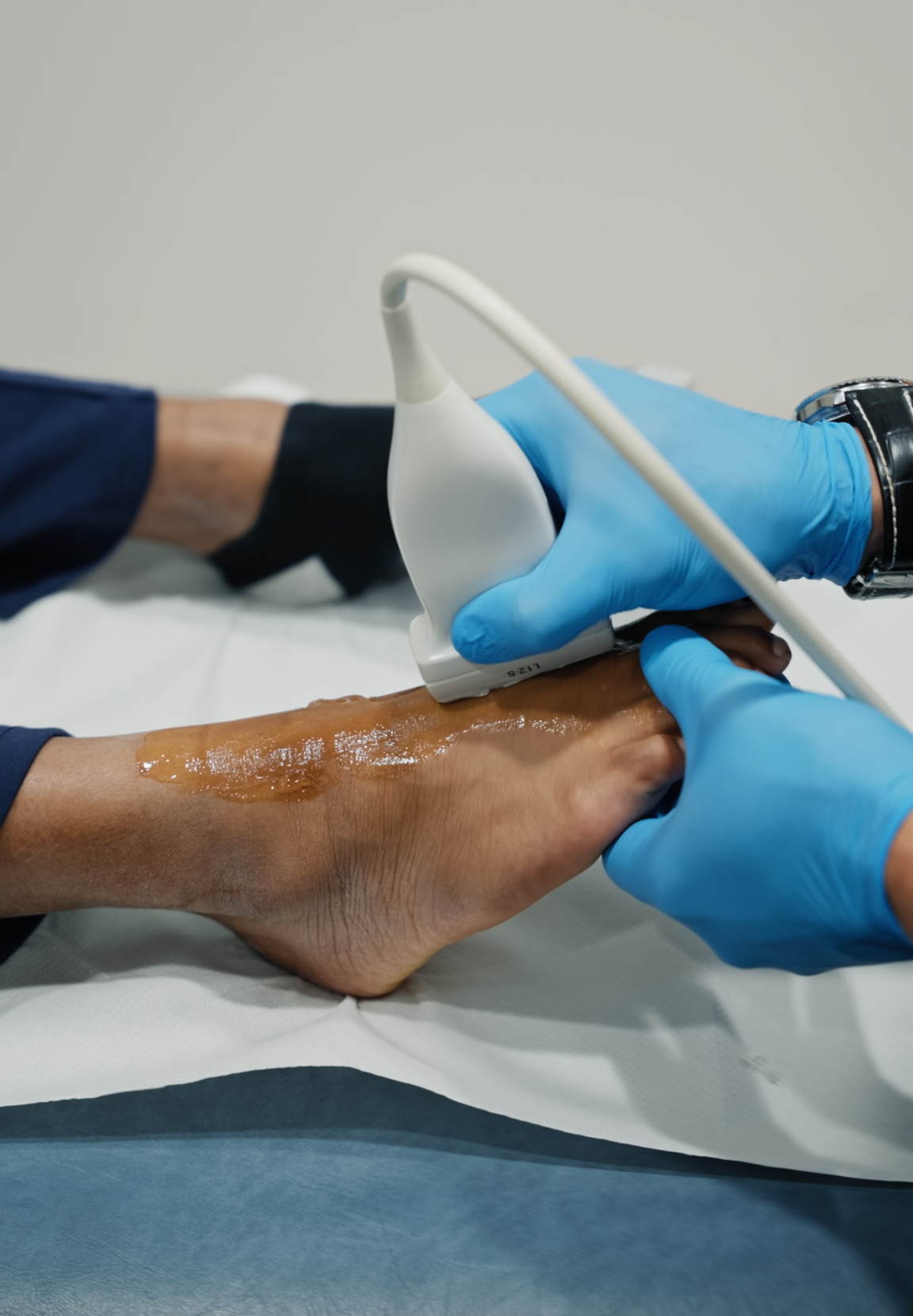
The first metatarsophalangeal joint, or first MTP joint, is the joint at the base of the big toe. Previous MRI findings and his surgical history supported the diagnosis of osteoarthritis. On examination, the joint remained stiff, with reduced movement, clicking and tenderness beneath and around it.
Arthritis was also present around the small bones beneath the joint, called the sesamoids. His surgeon had advised against further surgery in that area because of the risk of causing more damage. We discussed that fusion could be an option in the future if non-surgical treatment no longer provided enough relief.
Why repeat viscosupplementation?
A corticosteroid injection can provide short-term pain relief for some people with osteoarthritis.

Hyaluronic acid is another injectable option sometimes considered for the big toe joint. In this patient’s case, the first injection was followed by much longer relief than we would expect from a steroid (costisone) injection, with fewer risks and side effects, making a repeat treatment a reasonable choice to discuss.
His experience is encouraging, but it is individual: each patient must be judged on their own case and presentation of symptoms. After discussing the options and obtaining consent, I performed the repeat injection into the joint under ultrasound guidance.
The plan after treatment
He could keep mobile and continue training as comfortable, but I advised him to avoid competitive play for the week of the injection. He could use his usual pain relief if the joint felt sore afterwards. We discussed allowing time to judge the response rather than expecting an immediate result.
His current Hoka trainers were helping. Previous orthoses had rubbed and felt uncomfortable, so there was no reason to insist on wearing them; we could review the fit and design if he wanted to revisit that option.
Osteoarthritis does not disappear after an injection. The aim here was to manage pain and maintain function for as long as possible. For this patient, the first treatment had helped him continue playing the sport he enjoys, and his response gave us a useful basis for deciding what to try next.
About the author
Mr Liam Stapleton MSc, PGCert, PGDip, FFPM RCPS(Glas), FRCPodM is an Advanced Practice Podiatrist Prescriber and Specialist in Podiatric Sports Medicine.

His postgraduate qualifications include Independent Prescribing, Musculoskeletal Ultrasound, Advanced Clinical Practice, the Theory of Podiatric Surgery and Podiatric Sports Medicine.
If big toe joint pain is affecting your walking or sport, you can book an assessment with Kent Sports Podiatry at one of our clinics across Kent.
Call: 01622 961005Book online: www.kentsportspod.com/online-booking


Comments